
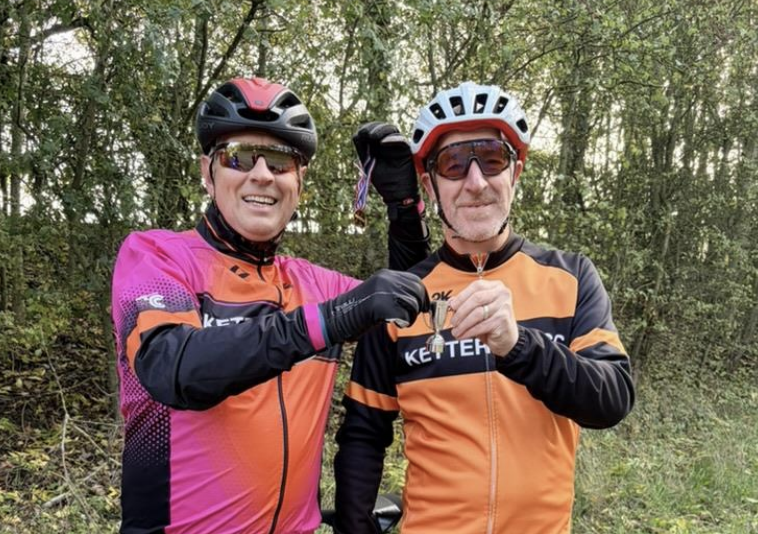
Kettering Cycling Club’s annual Downhill Challenge returned to Cransley this month, proving once again that you don’t need to turn a pedal to put on a great display of cycling skill and physics!
The concept of the event is brilliantly simple: from a standing start at the top of the hill in Cransley, pedaling is strictly forbidden
While it is one of the most lighthearted events on our club calendar
-
Stored Energy: At the start line, every rider holds a store of gravitational potential energy determined by their height above the finish and their combined bike-and-rider weight. The moment the brakes are released, gravity converts that potential energy into forward speed.
-
Weight vs. Momentum: Many assume heavier riders automatically win downhill races, though the reality is more nuanced. In a vacuum without air or road resistance, every rider would accelerate at the exact same rate regardless of weight. On real Northamptonshire roads, however, greater mass carries more momentum, helping riders punch through rolling resistance and air drag more effectively.
-
Aerodynamics Matter: Once speeds climb to 20 or 30 mph, wind resistance becomes the biggest enemy. In an event often decided by just a few metres, tucking neatly onto the bike to reduce your frontal area dramatically cuts aerodynamic drag and preserves precious speed for the final uphill roll.
Congratulations once again to Adrian and to everyone who took part in such a fun morning out on the bikes—and start practising your aero tucks for next year!